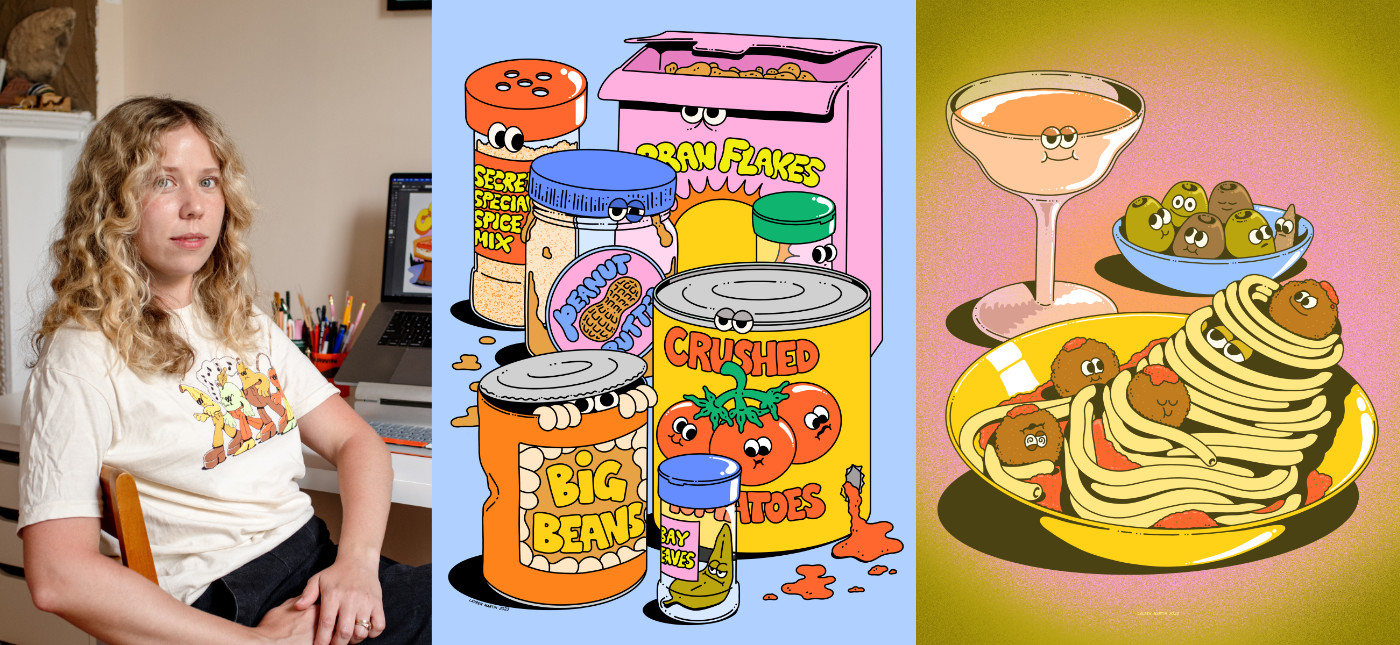
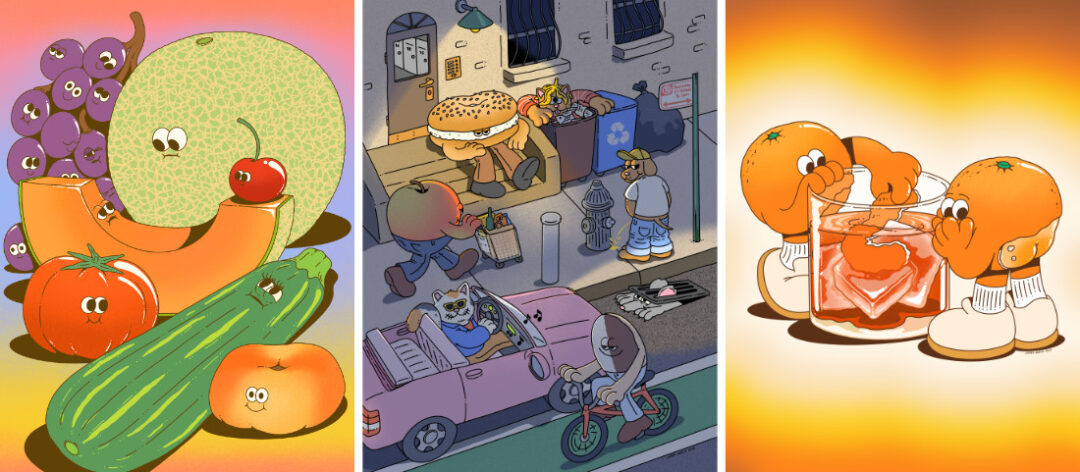
We could all use a bit more whimsy in our lives, and Lauren Martin‘s up to the challenge of providing it! The New York City-based illustrator is best known for her silly, sweet, food illustrations, but her cute anthropomorphic drawings of the Earth, woodland creatures, musical instruments, plants, sneakers, and more are also the cutest things you’ll see online today. She also takes her role as an artist a bit more seriously at times, however: art can be an “amazing vehicle for social change,” she says, and she also contributes her work to causes like climate change activism as well.
To create her work, Martin uses a Wacom Cintiq Pro 22. In this video, she goes over her process – from ideation to sketch to linework to colors. We spoke with her about her creative journey, her inspiration, her process, why she uses Wacom, and more. Note: the below interview has been edited for length and clarity.
You were inspired to pursue art at a young age because of an older cousin’s influence. Do you think, if it hadn’t been for them, you might have gone down another path – or would art have found you regardless?
My cousin moved in with my family to go to [the School of Visual Arts in New York City] when I was 4. I know that before she moved in I loved to draw, but seeing her pursue her studies and then a career in the arts made me realize that I could draw for a living. I always felt that making art was a calling, and I do feel that I would have been an artist no matter what – but my cousin’s influence definitely set me on that path very early.
You went to art school, but ended up taking a somewhat circuitous path – studying portraiture, then fashion, then design, illustration, and digital art. Overall, how do you feel about art school? Would you recommend a young artist in 2025 go to art school?
My path was definitely circuitous but in some ways, but I think that’s not an uncommon art-school experience! I believe my art school experience was incredibly valuable for access to materials, equipment, and feedback from professors. I do think these days, you can learn so much online and you can certainly learn a lot without going to school – but I feel that art school taught me organizational and practical skills that are harder to learn without day-to-day, in-person practice.
You’ve pursued a variety of artistic endeavors: playing in a band and designing its merch, animation, client work, apparel, editorial illustration … are there some types of creative work you enjoy more than others? And do ever you feel pressure to stick to one kind of output?
I feel really lucky to have gotten to do such a wide variety of projects for so many clients, and I really enjoy the variety of this line of work. I think I enjoy apparel the most – I guess my textile design and fashion school background get to make an appearance on those projects, and that’s really fun! I do feel sometimes that I get pigeon-holed into only drawing food characters – which I love! But I’m happy to draw anything!
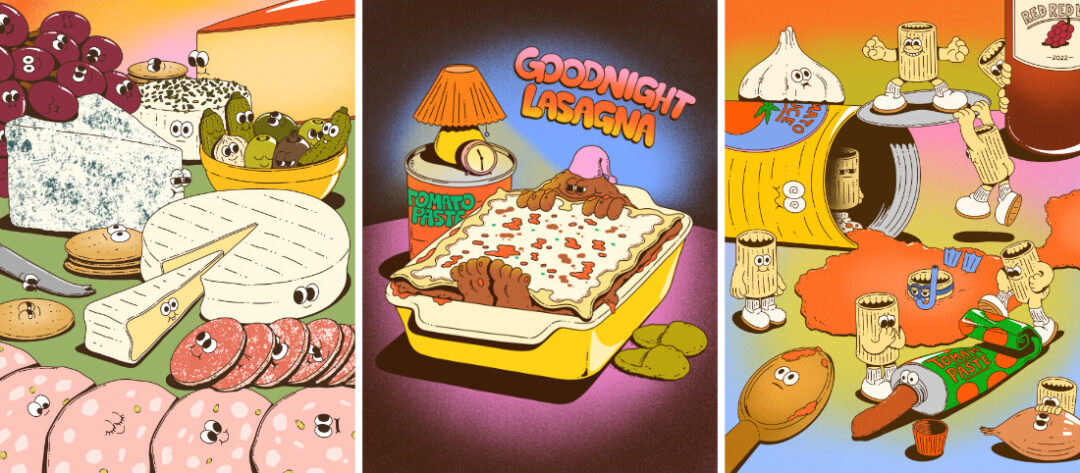
You are best known for your adorable anthropomorphic food illustrations. Why food? How did you get to a place where that was your primary subject matter?
It’s funny, I was just recently trying to figure out how food became my thing. I think it started because my first project was merch for a restaurant! I was also getting started on my first projects during the very beginning of the pandemic and at the time, restaurants needed a lot of artwork to help fundraise. I ended up doing a lot of food projects by chance early on in my career, and it just stuck!
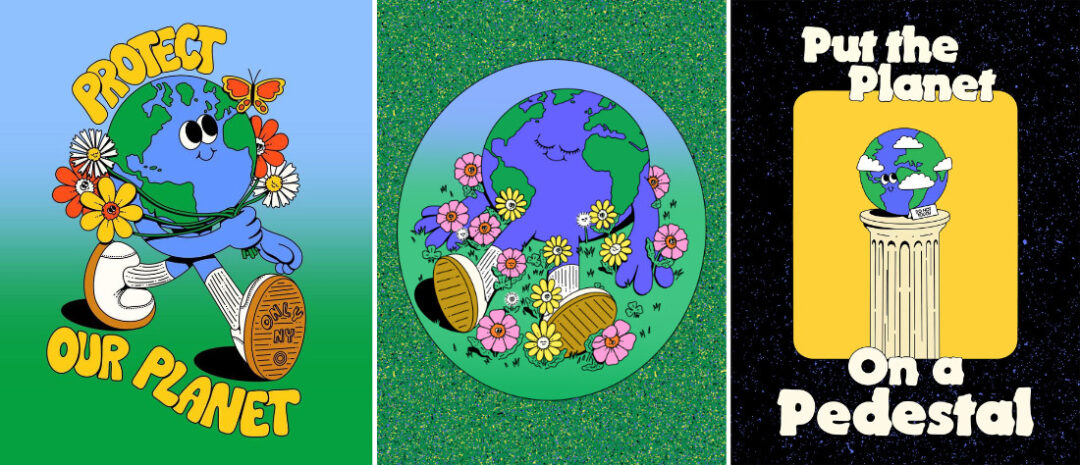
When you have branched out, it’s often because you’ve wanted to focus on a political or social cause, primarily climate change. How do you think about the relationship between art and social change? Do you feel obligated to speak on issues through your art?
I think art is an amazing vehicle for social change, and I enjoy getting asked to make art that has a positive purpose. Earlier on in my career, Instagram felt like a great platform for those messages and I felt empowered to share that art – but recently I feel less and less inclined to be on social media at all. I also feel that my art style doesn’t fit every issue, and sometimes the cuteness can downplay the gravity of the issue. But I jump at any opportunity I have to make artwork that can benefit a cause I believe in.
Social media can be a tricky place these days. How do you feel about it in a career sense? How do you think early-stage artists should approach it?
I do think social media still plays a huge role in finding potential clients. As much as I try not to spend too much time on it, I still try to make an effort to share my current work and treat it like a portfolio. I do think that being active on social media can just let people know that you’re working, and open to taking on projects. I don’t try to think too far ahead and get myself worried about how I’ll find work post-social media, but I think that making and keeping connections to art directors that I enjoyed working with and brands that I love is a good start!
You studied painting in school, but have been primarily working digitally for a while. Why did you initially make the switch? How have Wacom products facilitated that process? And do you ever go back and pick up the paintbrush?
I started working digitally in art school when I was studying Textile Design. The computer labs that I would use to do my work had Wacom Intuos tablets, so that was my first experience drawing digitally with pen on tablet. I do still keep a sketchbook, but I don’t paint that much these days … I’d love to get back into it, though.
You recently upgraded to a Wacom Cintiq Pro 22. What do you like about this device in particular?
Drawing on the Cintiq Pro is a truly luxurious drawing experience! There’s so much room! I love my new workflow, and it feels like I can really spread out. And having my computer set up next to it, and dragging windows back and forth between the two screens, is really great for when I have multiple files I’m working on, or a reference open on the screen that I can look at while I’m drawing.
You’ve spoken about the differences between client work, where you sometimes get “super-specific briefs,” and being a freelancer. Do you still prefer client work, or have your feelings about that changed? What are some of the pros and cons of each?
These days, I’m basically doing all client work! As much as I’d like to be working on self-started projects, client work definitely remains my bread and butter. I do love the variety that comes with working with different companies and brands, though – it’s always different every week! I do miss focusing on putting out my own body of work and managing my store, but these things all come in waves. Sometimes it’s client work for a while, and sometimes I get to focus on my own practice.
Do you have anything cool on the horizon that you’d like to share with our readers, or promote?
I’m working on so many things right now, I don’t even know where to start! I think I’m most excited about the children’s book I’m working on with my husband – it’s looking really cute! And yes, it’s about food!
About the artist
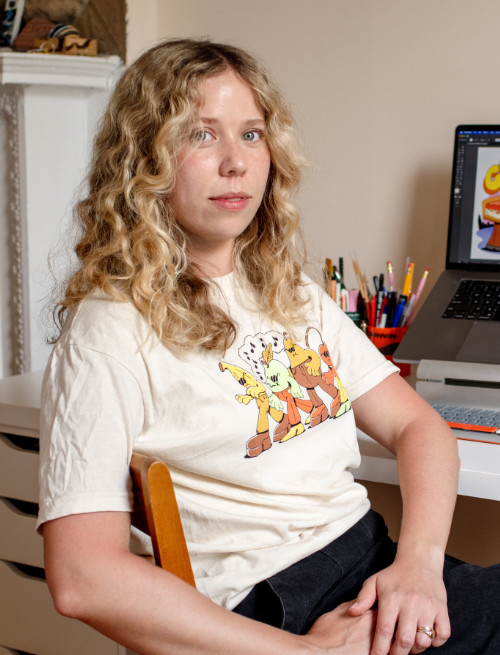
Lauren Martin is an illustrator from New York City whose artwork is inspired by the humor that can be found in nature and the mundane. In her world, flowers have legs and fruits have faces! She’s created work for a diverse range of clients including Apple, Spotify, Adobe, Nike, the New York Times, and 7-Eleven.
Check out her work or get in touch at her website, buy a print at her store, or follow her on Instagram.