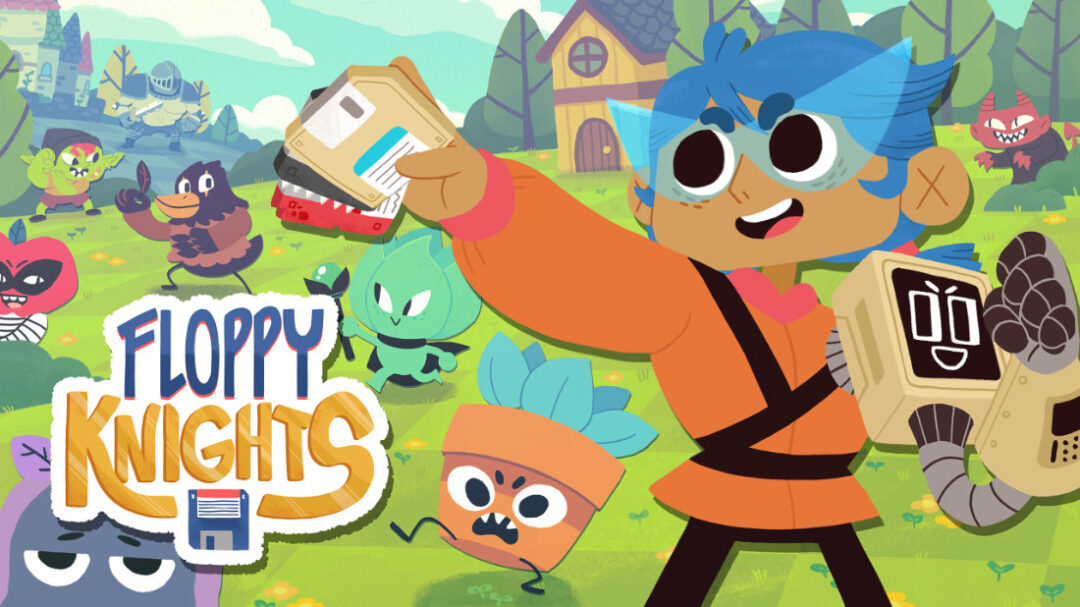
Artist, illustrator, and game developer Marlowe Dobbe is known for her work on award-winning roguelikes such as Dicey Dungeons, Floppy Knights, and the upcoming Slay the Spire 2. She has to design dozens if not hundreds of characters for her games, and recently gave a masterclass in character design using the new Wacom Cintiq 16 – check that out here. She’s also a freelance illustrator; her work has appeared in magazines, newspapers, clothing, and across the web.
She’s got a career many young artists, illustrators, and especially video game enthusiasts must envy! We spoke to her about her career, including her experience with art school, how she developed her distinct style, what advice she has for young or beginning artists who want to pursue a creative career like hers, and more. That interview is below. Note: the following interview has been lightly edited for length and clarity.
How did you first discover your passion for art? Were you a creative kid?
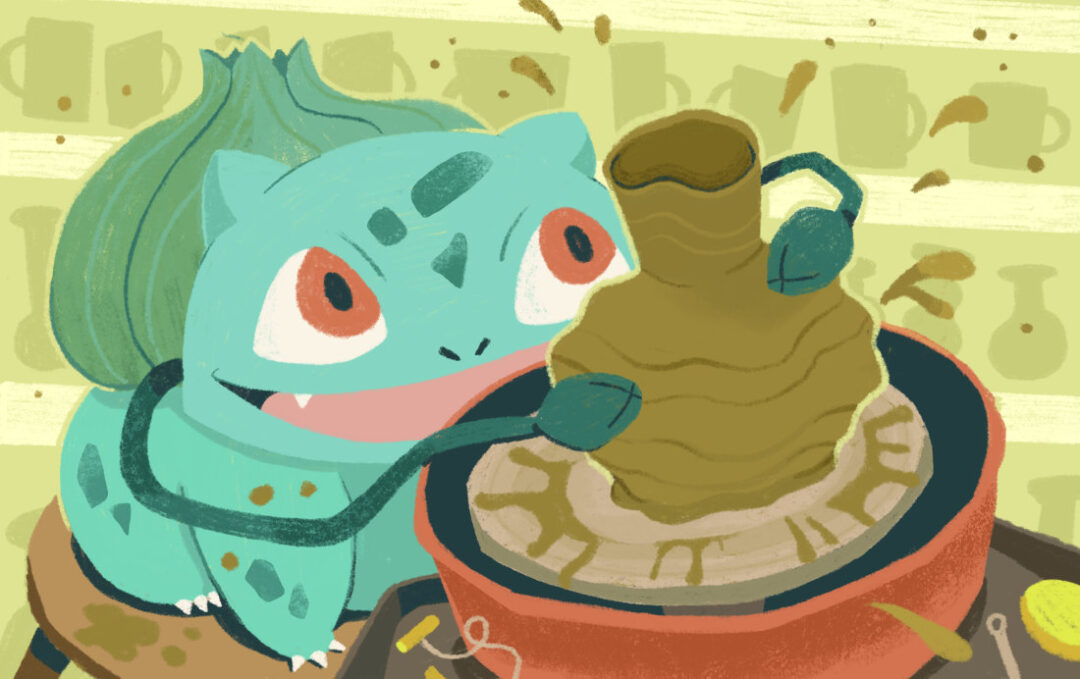
I was a very creative kid! Basically, I’ve been drawing since I could hold a crayon. Some of my earliest memories of getting “serious” about drawing was when I made it a mission to draw every Pokémon from Pokémon Gold and Silver when it came out.
You graduated from PNCA. Would you recommend art school to young creatives today? Why or why not?
I think it really depends on the type of person you are. I was very lucky and had fantastic professors and a great experience at school. However, when I went to PNCA it was already pretty prohibitively expensive, and colleges across the board have only gotten worse in terms of cost to students since I graduated. Art school can be a wonderful opportunity to build community with fellow students, and really allow yourself time to hone your craft, but the cost of tuition can wildly outweigh those benefits.
I think what I’d suggest to young creatives is to first look into accessible resources that are free. Check out community art meetups, see what your peers are doing, attend figure drawing sessions, look for courses and resources for learning art online, and take one-off classes for things you feel compelled to practice in person with others or require equipment that is more difficult to access. There are so many ways to learn the same things you’d learn in art school for free, you just have to cultivate the self-discipline to follow your own curriculum you set out for yourself.
So in short, as someone who did have a great experience in art school, I can recommend it if the financial side of it is not a burden, but if the cost of tuition makes someone nervous, they should definitely consider a more self-taught path. Free and low-cost resources are more accessible than they’ve ever been!

How did you begin your career in illustration and video games? Did you always think you wanted to make games? How did you envision your creative career path when you were younger?
I wanted to make video games from a young age. However, I had always told myself that only programmers made video games, and artists couldn’t make their own games. This was a misconception I carried through my early years in college, where I knew I wanted to make art but didn’t really know what application that would take.
Thankfully, there was a bit of an indie games boom that started in the early 2010s, when I was in school, that opened my eyes to the possibility of being able to make games as an artist. Simultaneously ,there was a pretty infamous online hate-campaign in video games called “Gamergate” that was occurring that was essentially anti-women. As I was nearing graduation, it felt like it was an important time as a woman myself to get into video games and make games using my voice.
I was recommended to start attending a local indie games meetup here in Portland called the Portland Indie Game Squad. Once I started going, I began to meet folks and practice game development with my peers. I was able to slowly build my portfolio with games projects until more and more of my freelance work became video games. Eventually that transitioned into me working in games full-time!
How have Wacom products factored into your creative journey, and what’s your current tech setup like? What do you think of the new Wacom Cintiq 16 that you utilized for the recent character design video you worked on for Wacom?
I’ve actually used Wacom products since I was a teenager. From my early years of using the Bamboo tablets with my laptop, to having access to the Cintiqs in college, and now my current everyday work setup uses the Cintiq Pro. I really enjoyed the Cintiq 16. I think I’d overall describe it and the Pro pen as “sleek.” I’m also quite excited about the potential of it being a bit more of a portable tablet for me to use. Normally I use a pretty large Cintiq Pro on an arm attached to my desk, but if I ever need to travel for work, or want to bring a tablet out of a video games meetup event, it’d be so easy to bring the Cintiq 16 along and set it up with almost no hassle!
You have a very distinct style. How did you come to this style? Do you experiment with different styles, mediums, or subject matter?
My style is not really something I deliberately landed on, but rather it’s something that kind of organically formed from years of looking at art and trying to emulate things that I liked. I was always really inspired by a weird cocktail of video game art, mid-century illustration, and anime and manga.
From my point of view, your style is like a dish that you’re always cooking for the rest of your life. You’ll start to land on drawing things a certain way that you like, and then you’ll see an illustrator who draws eyes in a really cool way that you want to try and emulate, so you add that ingredient to your dish. Then you’ll see a painting with a color palette that blows you out of the water, so then you’ll start to incorporate those colors into your dish. This kind of conversation with other art never stops. It’s very exciting cause you’ll begin to notice that your work will always resemble you, but your style will subtly evolve over time and you’ll always be improving or finding new things that interest you!
Do you ever feel like branching out into different artistic genres? Like, making a graphic novel, or animating a TV cartoon, or something like that?
Oh, all the time! I’m always guilty of fantasizing about too many side-projects. I love comics, animating, crafting, product design … you name it, I want to do it! It’s important to pursue those interests and opportunities if they arise. I do work in games full-time, but I’d say I keep a healthy practice of branching out mostly as a fulfilling hobby. But every now and then I get the chance to turn my branching out into some professional work.
There’s a lot of discourse right now about the state of the video games industry – studios shutting down or laying people off, the threat of AI-generated art and code, arguments about diversity and/or inclusion in games, etc. How do you feel about video games as an industry, whether as a whole or just the indie side of things?
I’d preface this by saying I have pretty much an exclusively indie viewpoint and experience I’m pulling from, so I can’t very well speak to the experience of people working at larger studios. It’s no big secret that it is rough out there right now for game developers of all walks. I am personally particularly lucky with the job that I have, in that I have a very strong team and leadership with a strong foundation that allows us to be unaffected by or weather the poor state of the industry quite well.
From my observations, though, there is currently a pretty perfect storm of factors to blame. Capitalism’s influence on the industry has led to executives and shareholders trying to get rich off of chasing trends, laying off as much staff as possible, and using generative AI to replace real people. This is all pretty ill-advised, in my opinion! Unfortunately, I think the reality for a lot of studios is that they get bought or acquired by people who want to make a quick buck, and have no consideration for sustainable success.
Personally, I am staunchly opposed to any use of generative AI. I think regardless of its efficacy as a tool, the environmental impact of using it far outweighs any benefits. From an artist’s perspective, generative AI tools that make images are completely stealing from artists and legally dubious in terms of copyright law. They can also stunt people’s potential growth as creators if they become reliant on them. I don’t see any benefits to using these tools whatsoever.
One argument I see a lot in games is that folks can’t afford artists, and therefore they have to use generative AI. To that, I say: there are many other, better avenues to take: Look up free or paid asset packs for video games on sites like itch.io! Look at Creative Commons! Or, even better, make your own art! The low-fidelity art you might make for your game will have infinitely more charm than AI slop. And if the game you’re making relies on making 50,000 character portraits and backgrounds, and you can’t find a way to make that work, you need to be making a different type of game rather than resorting to using tools that steal art. I don’t think generative AI tools to create art are going to be as omnipresent in games as the people making the tools want you to believe. It’s important to make sure your creative pipeline doesn’t become reliant on something that might not be around or available in a handful of years.
On top of all this, like you mentioned, there’s this consistent minority of people complaining about diversity and inclusion in games. I don’t have a quick answer on how to solve the funding problems of our industry, but I do know that culturally, I see myself and I see many of my peers continue to be inspired to make games in any environment. Indies will always be here, people of all sorts will always be making games, and we’re always going to be better for it.
To any aspiring video game creators, I say this: no matter who you are, you have a place in the games industry and there is community here for you if you seek it out. Whatever direction the financial state of the industry takes, I know that there will always be people who embrace diverse creators and creations, and that progress can’t be stopped.
What might you tell a young person who hopes to one day work in game development or to make art for games like you do? Do you have any advice or words of encouragement?
I’d say, if you’re interested in making art for games, start now! There are free and accessible tools and game engines everywhere, and making games is easier than it’s ever been. It’s important to start small. Don’t worry about making your space opera MMO right away. But make some small games to share with friends, make some small games for yourself. Participate in game jams with local or online game dev communities and learn how to work on a team in a low-stakes, fun environment. After a while, you’ll build experience and confidence and one day you can tackle those bigger projects you have in your head. In terms of getting into game development, truly anyone can do it!
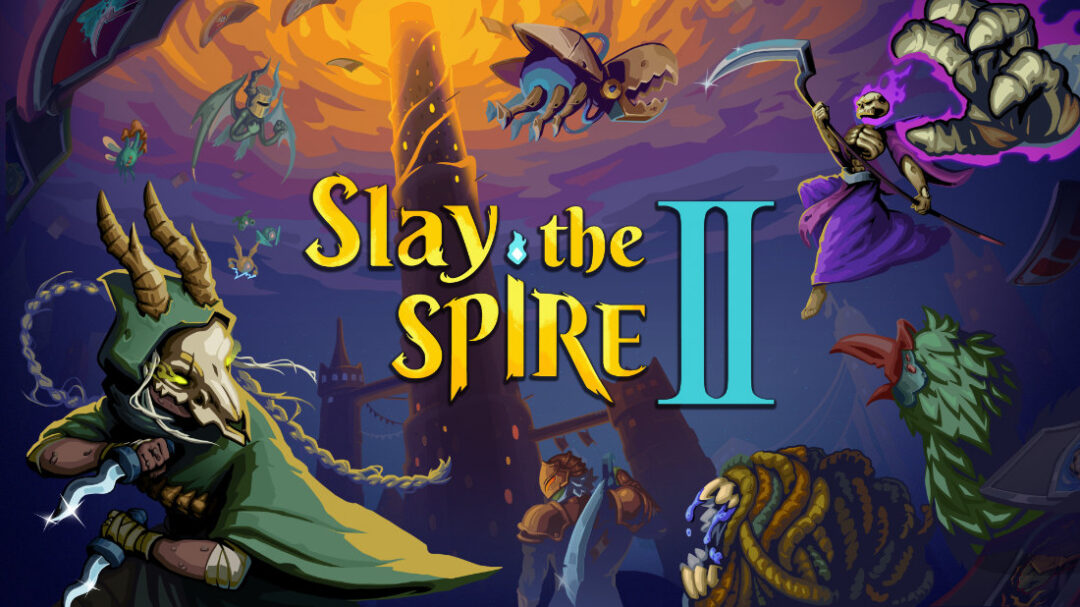
You’re currently working on Slay the Spire 2, set to release later this year. What’s it like working on the sequel to such a legendary game?
It’s been a very interesting and unique experience. Having not worked on the original, there has been this compelling challenge of trying to capture the visual spirit of the first game, but take it in a direction that is both improved and polished, but still recognizable to returning players. There will always be a struggle with working on a sequel to such a beloved game that many folks may be adverse to any amount of visual change, whether it be an improvement or no, but I’m really excited about the work me and my team are doing and I’m happy with the responses we’ve been able to see from folks so far!
Do you have anything else coming up on the horizon that you’d like to share?
I’m always excited to plug the work I’m doing as an organizer for The Portland Indie Game Squad. We have a great in-person and online community and are always hosting meetups, workshops, game jams, you name it! Keep an eye out for what we’re up to and what events we’re hosting, especially if you want to dip your toe into making games!
About the artist
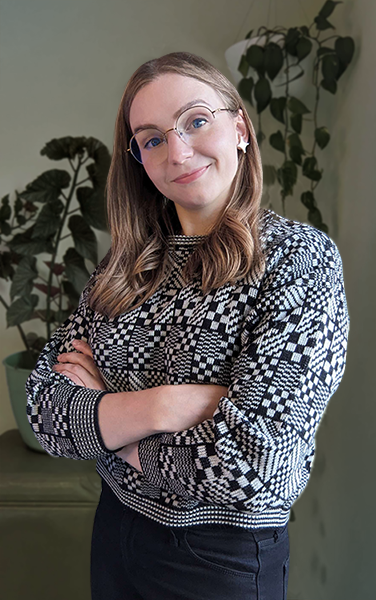
Marlowe Dobbe is an award-winning illustrator and game developer with a love for games she’s fostered since childhood. Previous projects of Marlowe’s include Dicey Dungeons, Floppy Knights, and a variety of small personal projects on itch.io. She is currently working as an artist at Mega Crit Games.
She’s also an organizer for The Portland Indie Game Squad, a 501(c)3 organization dedicated to supporting the health and continued expansion of game developer and enthusiast communities in Portland, the Pacific Northwest, and online.
Check out her work at her website, her itch.io, on Bluesky, or on Instagram.