Rachel Marx is a young artist who goes by @artsy.bolt online. She’s a 3D sculptor, illustrator, graphic designer, and works in animation production. She’s early in her career in art and animation, working for companies such as Nickelodeon and doing freelance work and commissions, especially of people’s pets! She normally uses a Wacom Cintiq pen display for her 3D modeling and animation work, but once in a while she’s out and about, often with her service dog Bolt accompanying her, and wanted something a bit more portable for sketching and on-the-go creativity.
We thought she’d be a great person to try out the Wacom MovinkPad 11 all-in-one portable drawing pad, and she made a video all about her experience. We also interviewed her about her creative journey, inspiration, and why she believes networking is the young artist’s superpower. Note: the interview below has been edited for length and clarity.
How did you discover your passion for art? Were you a creative kid?
I’ve always been drawn to creating and making art for as long as I can remember. As a kid, I was rarely without a sketchbook, constantly filling pages with drawings of whatever I could think of or drawing my favorite characters or animals. Creativity wasn’t limited to drawing, either; I spent much of my childhood immersed in dance, often logging close to twenty hours a week at the studio. Storytelling through movement and visual expression became a huge part of how I understood the world.
You recently graduated with a degree in Art and Animation. How was your college experience?
I had a very nontraditional start to my college journey. I applied to art schools, and was incredibly grateful to be accepted into many of them, but the cost of tuition at dedicated art schools was significantly higher than what my state university, Illinois State, offered. It also had a highly rated art program, so I decided to save money and attend the state university I had already been going to as a dual-enrollment student while still in high school.
One challenge was that the university did not formally offer an animation degree at the time. While they had many of the necessary classes, there wasn’t a defined path for animation students. Fortunately, it allowed students to design their own interdisciplinary degrees – so I went through a detailed proposal process, researched available courses, worked closely with several advisors and faculty members, and after a year of revisions and approvals, my animation-focused degree was officially accepted! That experience taught me how to advocate for myself and take ownership of my education, skills that have proven invaluable beyond college.
Alongside my university coursework, I spent a significant amount of time self-teaching. I learned Autodesk Maya through YouTube tutorials and continued developing my skills in storyboarding, character design, and animation through online schools run by industry professionals. I also collected a wide range of animation and art books throughout high school and college. I wanted to absorb as much knowledge as possible from every source available to me.
Would you recommend studying art in college to another young artist who’s trying to determine their path?
For young artists trying to decide which path to take, the process can feel overwhelming. There’s often a lot of pressure to make the “right” choice, and fear that a wrong decision could negatively impact future opportunities. What’s most important, I think, is taking the time to evaluate your current needs and long-term goals. For me, attending a state school, working hard, and supplementing my education with self-teaching allowed me to graduate without student loan debt. While I did worry that not attending a major art or animation school, especially one with professors actively working in the industry, might affect my job prospects, I found other ways to bridge that gap.
Attending industry events like CTN Animation Expo and LightBox Expo became a turning point in my career. These expos allowed me to meet professionals, learn directly from people working in animation, and begin building a strong network. I highly recommend both to anyone interested in entering the industry. Ultimately, it was networking, combined with persistence and preparation that led to my first job in animation as a production assistant at Nickelodeon, two years after graduating from college. My experience reinforced the idea that there is no single “correct” path into the industry, only the one that works best for you.
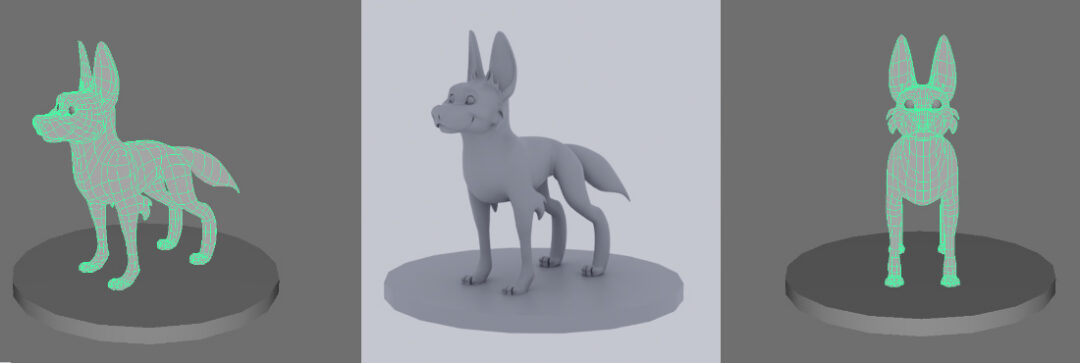
How did you determine you wanted to go into 3D modeling and animation?
I realized I wanted to work in animation when I was just nine years old! I was at a friend’s house one afternoon, sitting in her basement watching Disney’s Bolt, which she had just gotten on DVD. I hadn’t seen it before, and when the movie ended I looked at her and asked if we could watch it again. We did. Afterward, I went home for dinner, walked into the house, and casually announced to my parents, “I’m going to work in animation.” They were understandably shocked. It felt completely out of nowhere to them, but to me it felt like I had discovered the path in life I wanted to be on.
From that moment on, my relationship with drawing shifted. I had always loved to draw, but now it became something closer to an obsession. I started paying closer attention to animation as an art form, especially the behind-the-scenes bonus features on DVDs. What had once been just fun extras suddenly felt meaningful. I wanted to understand how these films were made, not just watch the final product.
Around this time, I also became fixated on learning Autodesk Maya. In high school, because of my dual enrollment program, I had my own .edu email and student access to the software . With more maturity and context, I started to truly understand the software.
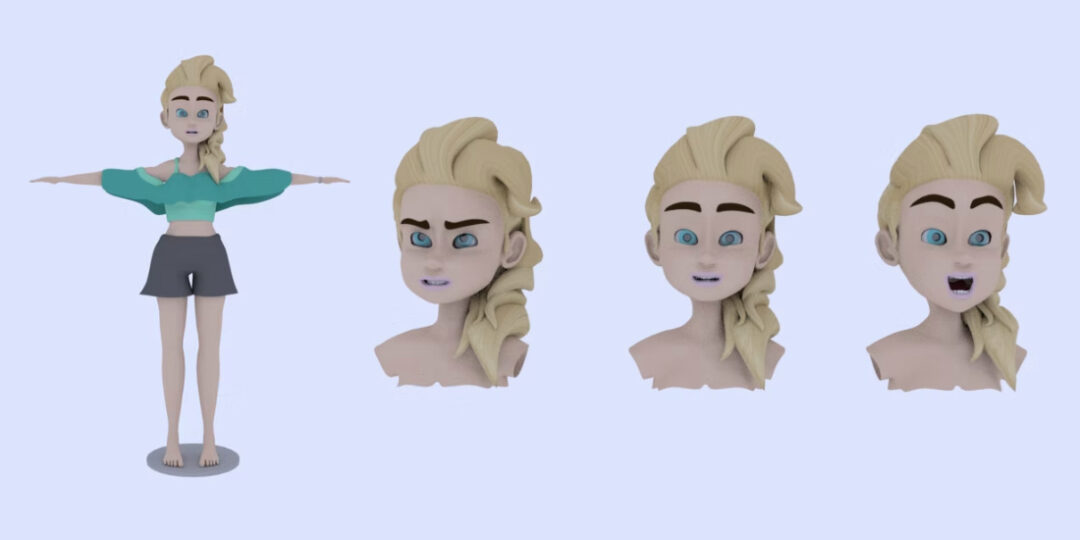
As I grew older, I explored a variety of creative paths. I took classes in storyboarding, character design, and animation, and experimented with different roles to see what resonated most with me. No matter what I tried, I always found myself coming back to 3D modeling for an artistic role, the joy of designing something and bringing it to life in three dimensions. That process felt the most natural and exciting to me, and over time it became clear that this was the area where my passion and skills aligned in art.
What is your tech setup like currently (software and hardware) for 3D modeling?
My current tech setup is fairly straightforward, but perfectly suited to my workflow. I work on a desktop computer that my dad and I built together last year, which makes it especially meaningful to me. Building it ourselves allowed us to tailor the system to handle demanding 3D work while also giving me a deeper understanding of the hardware I rely on every day. I also use a Wacom Cintiq pen display from 2014. Despite its age, it’s still going strong, and I really appreciate how durable and reliable it has been over the years.
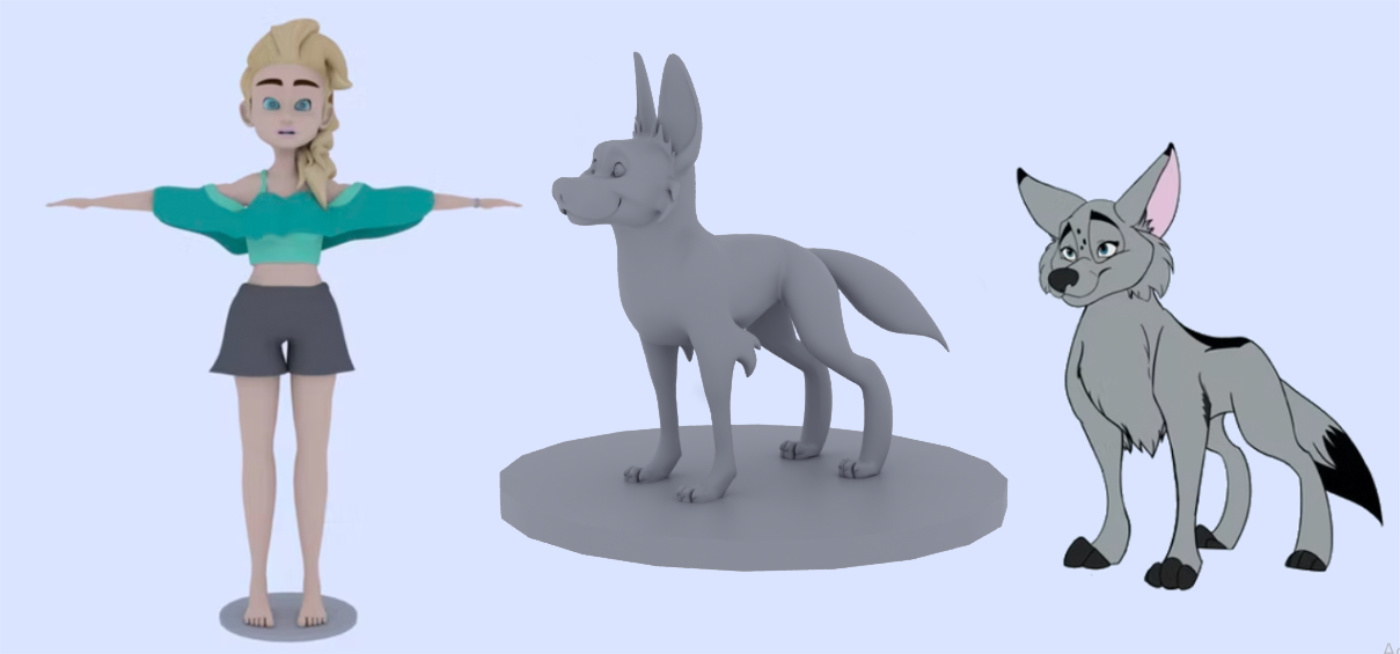
When it comes to software, I primarily work in Autodesk Maya for 3D modeling and scene work, and Maxon ZBrush for sculpting.
You’ve recently been supplementing your home setup with the Wacom MovinkPad 11 all-in-one portable drawing pad. What do you think of the device?
I’ve absolutely loved incorporating the Wacom MovinkPad 11 into my workflow. The feel of drawing on it is incredibly natural. It’s the closest I’ve come to the experience of working in a traditional sketchbook with a pencil, which has made digital drawing feel more intuitive and personal. One of my favorite aspects of the device is its portability. I can easily take it with me to study and draw from life, whether that’s in a café, or while traveling, which has encouraged me to sketch more often and in new environments. It has also allowed me to take my commissions on the go which has been very nice.
Using the MovinkPad 11 has also given digital art a renewed sense of excitement for me. That sense of freedom has positively impacted my overall workflow, allowing ideas to flow more naturally and strengthening the connection between my traditional drawing habits and my digital work.
You recently gave a talk at Lightbox Expo about networking. Why is networking so important?
Yes! Networking is a topic that’s incredibly important to me. The talk I gave at LightBox Expo was actually the third time a friend and I have spoken on this subject, because networking plays such a critical role in the animation industry. In an industry that thrives on collaboration, relationships often open doors that talent alone can’t. Networking isn’t about asking for favors, it’s about making genuine connections and building community, and it has been a major factor in shaping my career.
Networking was directly responsible for helping me land my first job at Nickelodeon. During the pandemic, LightBox Expo was held virtually, which changed the way artists connected with one another. At the time, one of the most effective ways to network was through LinkedIn, so I began sending connection requests to panelists who I saw speak at the online expo that year. One of those panelists turned out to be an alumnus of my university and also from my hometown. After exchanging messages, I learned he was living nearby, and we decided to meet for coffee. At the end of our conversation, he kindly offered to pass my résumé along to the Nickelodeon recruitment team.
About a week later, I received a call from a recruiter at Nickelodeon, which led to several screening calls and interviews with different teams. It was actually team for the third show I interviewed with that extended an offer. I wanted to relocate to California before my start date, so within three weeks I gave notice at my job as an aquatics coordinator at the local YMCA, packed up my life, and found an apartment! It was a whirlwind, but an exciting one.
That experience reinforced just how powerful networking can be. It didn’t just help me land my first job; it has continued to create opportunities throughout my career from speaking on panels and forming friendships with incredibly talented artists, to working with companies like Wacom. Networking has shaped my professional path in ways I never could have predicted, which is why I’m so passionate about sharing its importance with others.
What advice do you have for young artists who want a career in animation and/or 3D modeling?
Looking back on my journey so far, it’s clear that my career has been shaped by a mix of curiosity, persistence, and a willingness to take unconventional paths. From being a sketchbook-carrying kid obsessed with animated films, to carving out a custom animation degree, to continually supplementing my education through self-teaching and industry events, every step has helped build the foundation I stand on today. Along the way, I’ve learned that there’s no single “right” way into animation. What matters most is staying curious, adaptable, and open to learning from every experience.
Most recently, I wrapped up my time at Nickelodeon after working there for three and a half years, on the show Max and the Midknights as a production assistant and then coordinator. That chapter was an incredibly formative one, filled with valuable lessons, meaningful collaborations, and growth both professionally and personally. I discovered how much I genuinely love working in production and have a clear goal to continue growing along this path within the animation industry. I’m deeply grateful for the people I worked with and the opportunities I was given, and I carry those experiences with me as I move forward.
As I look ahead, I’m excited to see where my career journey takes me next. Animation is an ever-evolving industry, and I’m eager to continue learning, creating, and connecting with others along the way. Wherever the path leads, I know it will be shaped by the same passion for storytelling and art that first drew me in all those years ago.
About the artist
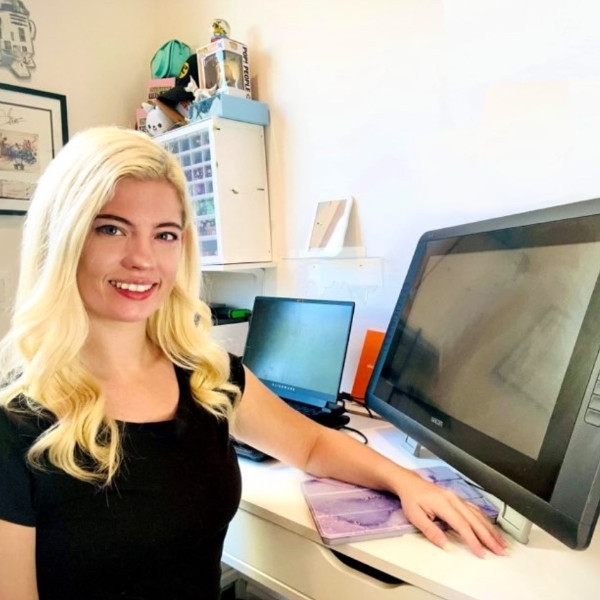
Rachel Marx, known online as @artsy.bolt, is a 3D sculptor, illustrator, graphic designer, and also works in animation production. She has also been a public speaker at conferences such as Lightbox Expo, and is often seen with her service dog and “sidekick,” Bolt!
Follow her work on her website, her Instagram, or connect on LinkedIn.