Young people who love art don’t have to choose between following their dreams and finding a career. There are so many other creative careers out there beyond the typical ones we often hear about like graphic designer, animator, comic book artist, or illustrator.
This post is one in a series of Wacom articles exploring a variety of Creative Careers. If you’re a young, artistic person thinking about your future and want to check out all of our Creative Careers content, click here! If you’re an art or CTE teacher or professor, scroll to the bottom for some special Creative Careers resources from Wacom.
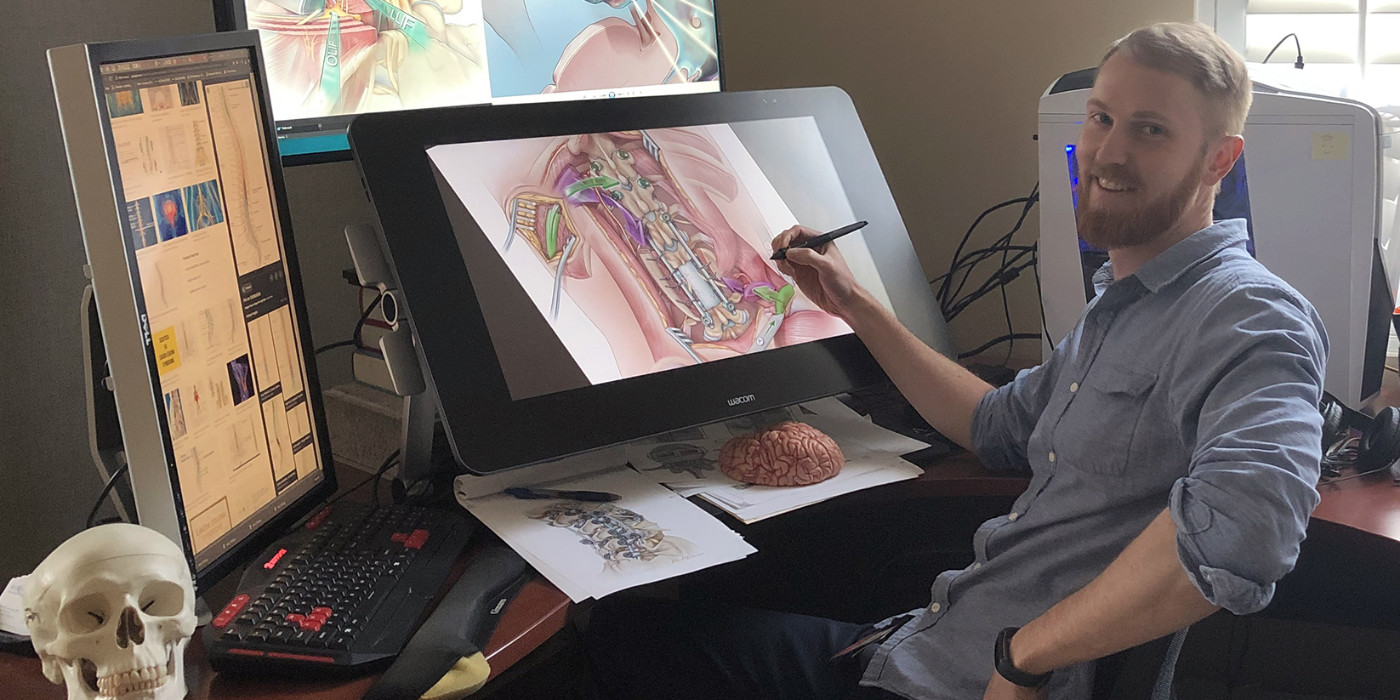
One lesser-known creative career that can be extremely rewarding is Medical Illustrator. In the below video, medical illustrator Peter M. Lawrence talks about his work, how he pursued the career, what it entails, the Wacom tools he uses, and why it’s so rewarding.
Peter Lawrence was fascinated by science and loved art from a young age, but it was much later in life that he discovered the medical illustration profession. Peter was pursuing an art degree at George Mason University when a friend told him about a specialized graduate program at Johns Hopkins called Art as Applied to Medicine. He knew that this was the occupation he had been looking for – he could combine his interest in science and his love of art into one career and become a medical illustrator.
He later decided to attend the Medical Illustration Graduate Program at Medical College of Georgia, now Augusta University, and specializes in neuroscience. He has been working as a professional neurosurgical illustrator since 2016.
What does a Medical Illustrator do?
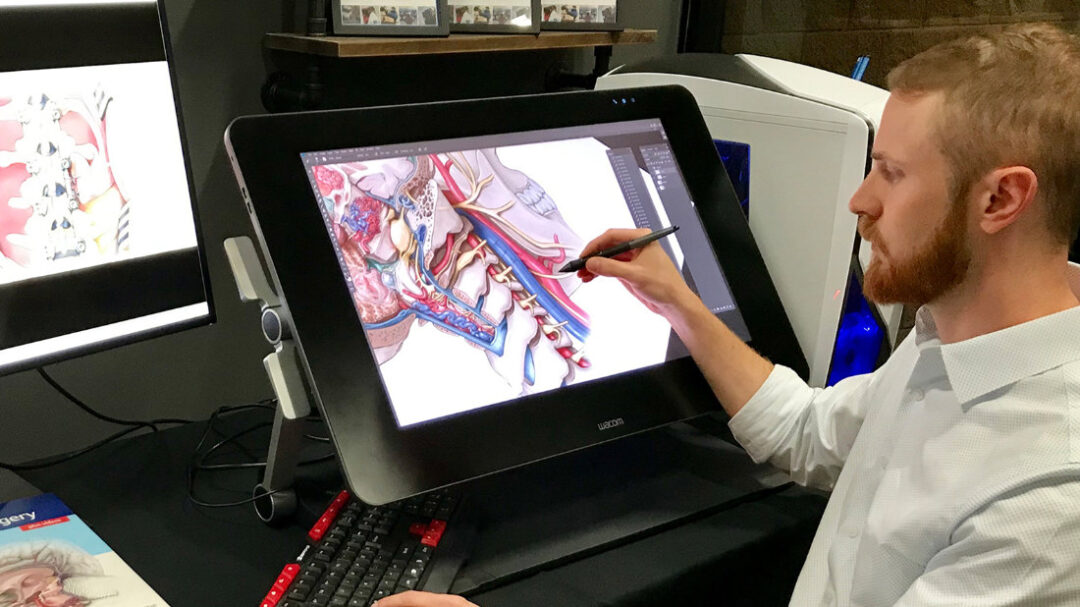
Medical illustrators communicate health and medicine-related ideas through visual media in a variety of publications, such as medical journals, textbooks, and public health websites. Featured Medical Illustrator Peter Lawrence focuses specifically on neuroanatomy – drawing brains and skulls.
Where do medical illustrators work?
Many medical illustrators are self-employed / freelancers. Others work at medical schools, hospitals and clinics, research institutions, medical publishers, law firms, or other studios that produce medical illustrations. Some grow their careers into leadership positions as art directors, managers, administrators, faculty members, or business owners.
Who might enjoy this career?
Anyone who has an interest in art as well as health care, science, biology, and/or anatomy, and who isn’t squeamish about medical or health care issues.
What skills are needed for medical illustration?
- Deep knowledge and interest in science and medicine as well as art
- Communication and collaboration skills
- Attention to detail and ability to follow specific directions/instructions
What kind of education is necessary?
Many medical illustrators go through medical illustration graduate school programs after earning a Bachelor’s degree in art or a science field, like the medical illustration programs accredited by the CAAHEP and IMI. These programs are competitive and intense, covering medical and artistic topics in equal measure.
What tools do medical illustrators use?
- Traditional art tools such as colored pencil, paint, and ink
- Digital 2D and 3D art software for illustration and modeling (Adobe Photoshop, Blender, ZBrush)
- Creative pen tablets and displays such as Wacom Cintiq Pro
What is the salary range for medical illustrators?
Average salaries of $80-$100,000 USD per year, with very high growth potential.
Are you an art and/or CTE educator?
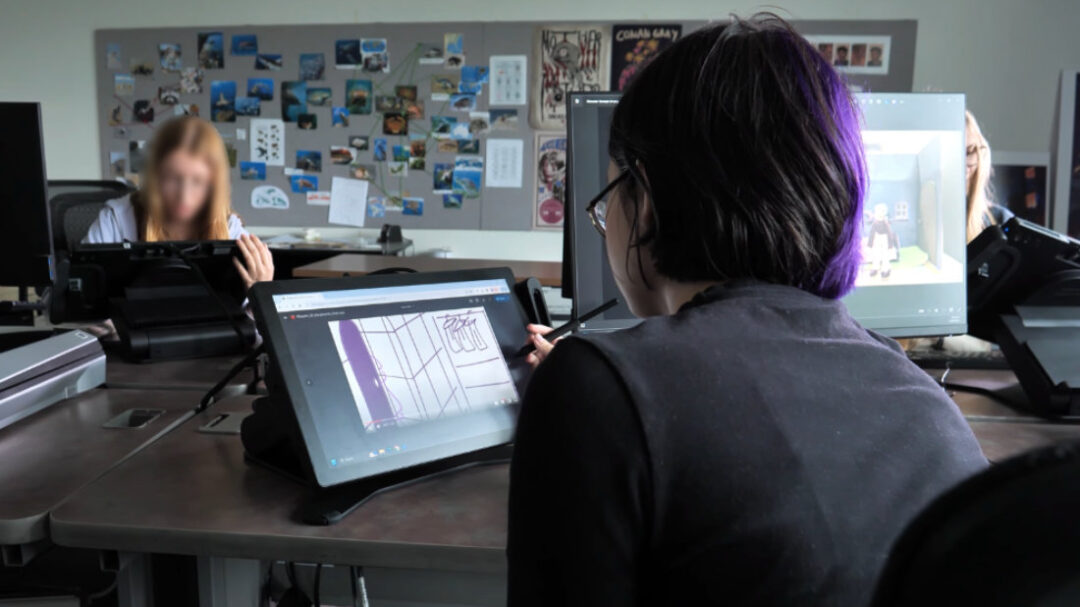
We’ve created a poster version of this Creative Career profile, in case you’d like to give your students easy access to this information! It even feature a QR code that links directly to the video above. Click here to access the poster download.
Also, check out Wacom’s Creative Careers page for dozens of articles and resources about career paths for creative young people! It features interviews from professionals, editorials about art school, Creative Education webinars, resources to help with applying for classroom grants, and much more. If you’re interested, click here.
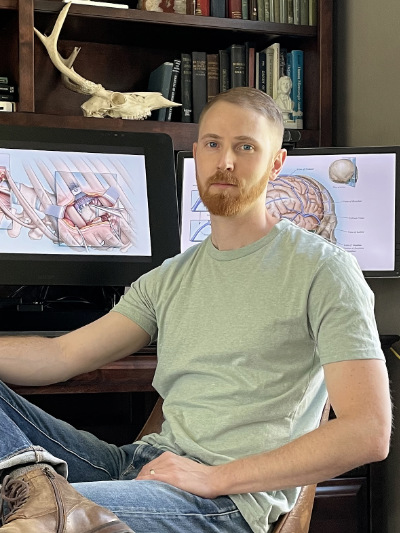
About the artist
Peter M. Lawrence is a certified medical illustrator and visual artist. He currently works in and out of the operating room as the Senior Neurosurgical Illustrator at the Barrow Neurological Institute in Phoenix, Arizona. He works closely with the neurosurgeons, providing media expertise for academic publishing in peer-reviewed journal articles, textbooks, and presentations.
To learn more, check out his website, Instagram, X (formerly Twitter), Facebook, or LinkedIn.